ServicesWhole-Home Filtration
Whole-Home Filtration in Germantown
We mount a single filter system on your main water line, so every faucet, shower and appliance downstream draws treated water. You get a plain account of what it removes and what it leaves alone, a system sized to your house, and a tidy, careful install.
How Whole-Home Filtration Works
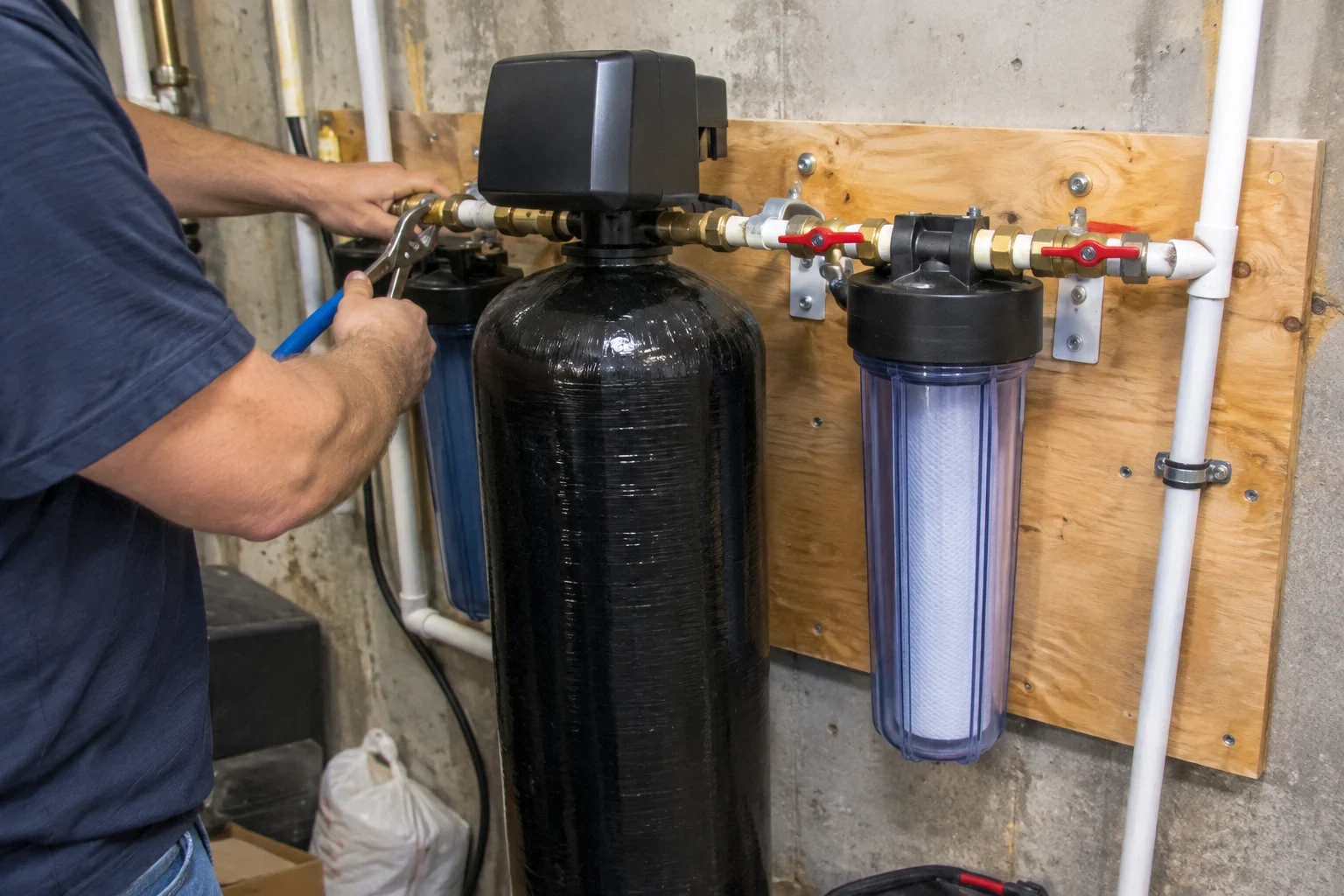
This kind of system, also called point-of-entry filtration, is installed on the main line right after it enters your home, most often in the basement beside the meter or pressure tank. Incoming water first meets a sediment stage, then flows through a tank packed with carbon on its way to the rest of the plumbing. That carbon holds on to chlorine and many of the compounds behind off tastes and odors, so showers lose the pool smell and coffee tastes like coffee again.
It is the right choice when the trouble is not limited to one room: an odor in the bathroom, a strange taste at each tap, grit gathering in faucet aerators. It will not soften water, and it is not a purifier for drinking water. Scale from hard water calls for a water softener, and the most thorough treatment for drinking and cooking comes from a reverse osmosis unit at the kitchen sink. We will tell you which one your home really needs, even if that turns out to be a smaller system than you expected.
What Comes With the Install
Sediment prefilter
A cartridge housing sits first in line and traps sand, rust flakes and grit before they reach the carbon or your fixtures. Changing the cartridge is a quick job you can do yourself.
Carbon media tank
The main tank is filled with activated or catalytic carbon. If your water is treated with chloramine, catalytic carbon handles it better, so the media is chosen to suit your supply.
Bypass valve
With one turn, water skips the filter and keeps flowing to the house while the system is serviced. It is an inexpensive part that makes every future cartridge or media change easier.
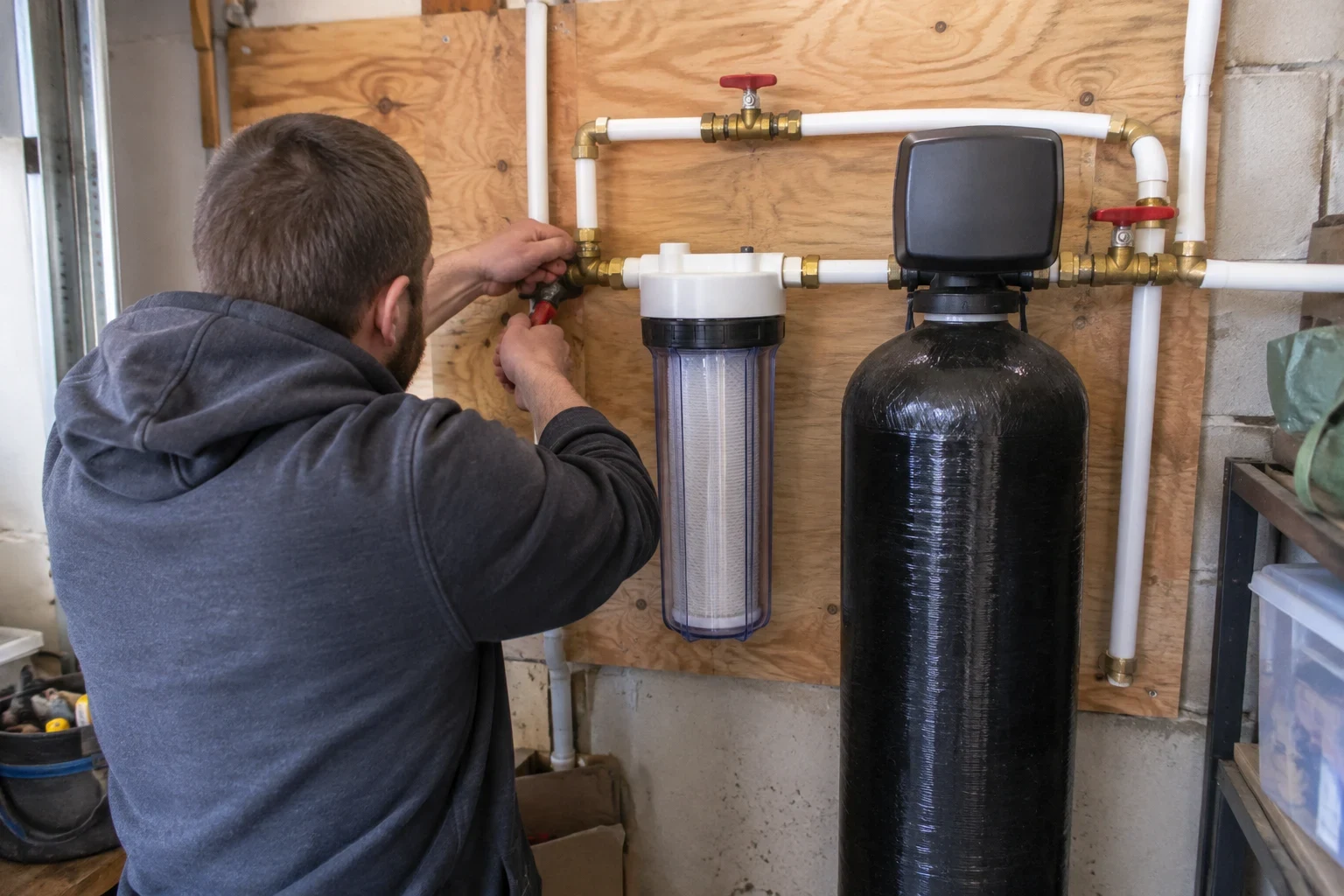
Neat main-line connection
We tie into the main with proper fittings and add supports so the weight of the piping never rests on the valve. If the tank backwashes, we run a drain line to a suitable spot.
First flush
Fresh carbon gives off fine black dust at first. We rinse the tank until the water comes out clear, before anyone in the house uses it.
Signs Your Water Needs Treating at the Main Line
- A chlorine odor in the bathroom
- Hot water releases chlorine as vapor, so the shower is where it hits you hardest. Carbon on the main line takes it out before the water reaches the showerhead.
- The same off taste at every faucet
- When the bathroom sink tastes just like the kitchen sink, a single faucet filter only solves the problem in one room.
- Grit in aerators and screens
- Fine particles collecting in faucet aerators, showerheads or the inlet screens on appliances point to sediment that a prefilter will catch.
- Filters all over the house
- Replacement cartridges for the fridge, a pitcher and a shower head add up. One system on the main line is often simpler to keep up and costs less over the years.
From First Call to Finished Install
- 1
Start with a call
Tell us what you are noticing and at which taps. If you have a recent water report or lab results, we go over them together. Then you get a direct answer on whether a whole-home filter fits.
- 2
Check the plumbing
We look at the size of your main line, where the tanks can stand, and whether a floor drain or laundry drain is close enough for backwash. You receive a written quote listing every part, and it holds for 30 days.
- 3
The install
We cover the floor, shut off the water, then set the bypass and tanks and connect the drain line. The water is off for only a portion of the appointment, not the whole day.
- 4
Rinse, test and hand over
After flushing the media, we check each connection for drips and clean the work area. We show you the bypass and the cartridge change before we leave. Full payment is due when the install is complete.
What Changes the Cost
No two houses need quite the same system, so we set the price once we know your home. The items below are what raise or lower it. Each one appears as its own line on your written quote.
- Household size and peak flow
- A house with three bathrooms running at once needs a bigger tank than a two-person ranch. Too small a tank costs you pressure and burns through media early, so we match capacity to your real usage.
- The media inside the tank
- Standard activated carbon is the lower-cost option. Catalytic carbon carries a higher price and earns it when your supply uses chloramine. Specialty blends are added only if your water gives a reason for them.
- Backwash or upflow design
- A backwashing tank stretches the life of its media, but it needs a control valve, a drain and an outlet. An upflow tank has none of those, which can make the install simpler.
- Room to work
- An open, unfinished basement near the meter is the easy case. Finished walls, a cramped utility closet or a main line that has to be rerouted add labor time.
- Adding a softener in the same visit
- When a water softener goes in too, the carbon is placed ahead of it to shield the resin. Doing both at once means one round of plumbing work instead of two.
Questions About Whole-Home Filters
- Does a whole-home filter make hard water soft?
- No. Carbon removes chlorine and many compounds that affect taste and smell, but hardness comes from dissolved minerals that carbon lets pass. White crust on faucets or spots on glassware point to a water softener instead. Plenty of homes run both, with the filter placed first.
- Will my water pressure drop?
- When the tank is sized to your house, most people never notice a difference. A clear drop usually means the tank is too small or the sediment cartridge is past due for a change. We size for your busiest hour of water use and show you how to swap the cartridge.
- How long does the carbon last?
- Media in a whole-home tank usually lasts years rather than months, depending on how much water your home uses and what is in it. The sediment cartridge needs changing more often. We give you the expected schedule for your setup before you decide.
- Is filtered water from every tap good enough for drinking?
- Every tap in the house will taste and smell better. For a deeper level of treatment on the water you drink and cook with, a reverse osmosis unit under the kitchen sink is the better tool. We explain the difference and the choice stays yours.
- Our home has a private well. Is this the right system?
- On its own, likely not. Well water often carries iron, a sulfur smell or sediment, and a plain carbon tank is not built for those. Our Well Water Treatment page covers the systems designed for wells, and we can talk through the right one by phone.
- When do I pay, and can I finance it?
- You pay in full once the install is complete, not before. Financing is available through U.S. Bank Avvance, on approved credit, and we can go over it when you call. Signing does not lock you in right away: you have three business days to cancel.
Find Out What Your Home Needs
Tell us what you are noticing and we will give you a straight answer and a free quote. We can also walk you through financing options on the same call.