ServicesWater Softeners
Water Softeners in Germantown
Mineral crust on faucets, cloudy glasses and a water heater that wears out early all trace back to hard water. We match the softener to how hard your water is and how many people use it, fit it carefully, and show you how it runs before we go.
How a softener works and who it helps
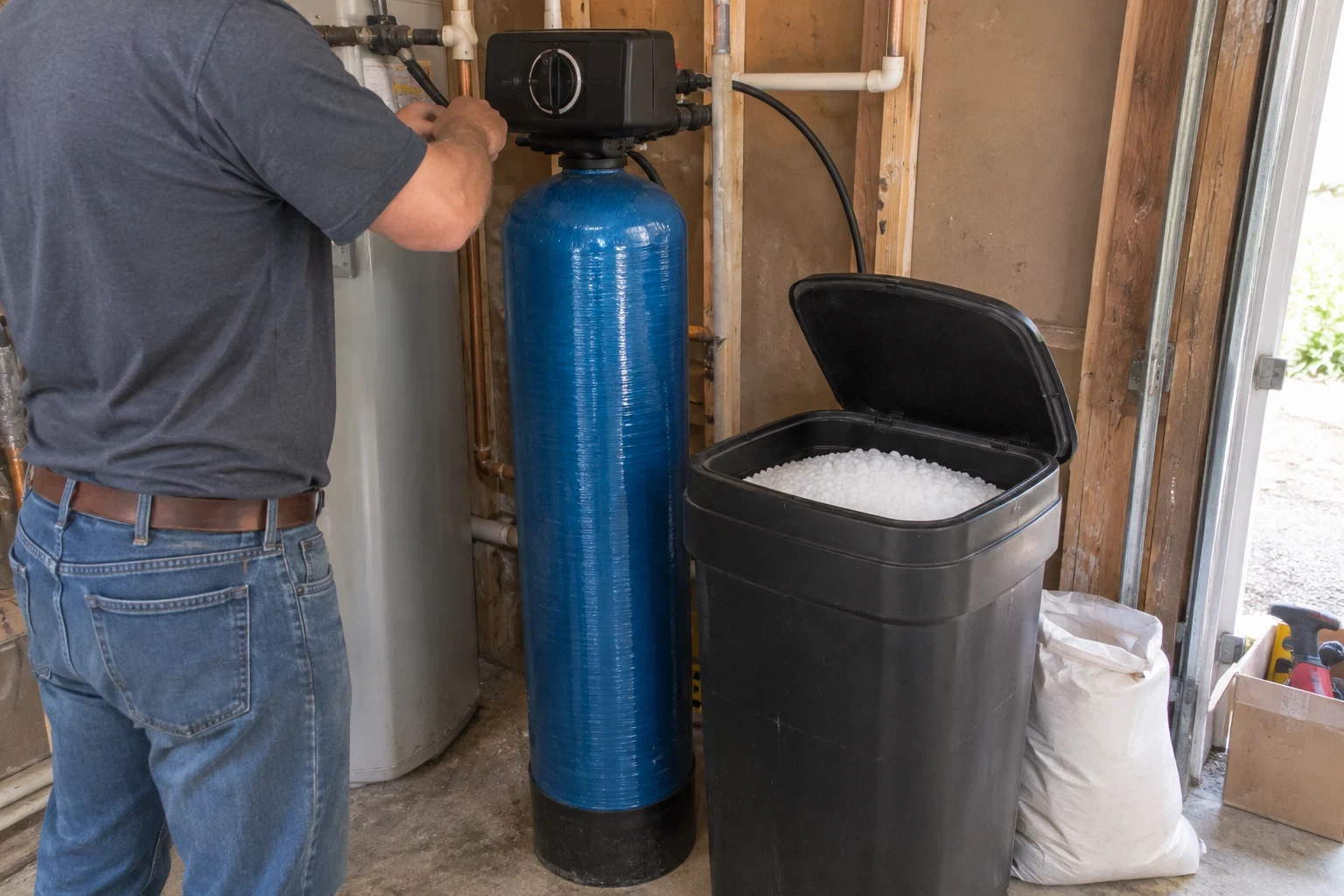
Calcium and magnesium are the minerals that make water hard. As water passes through a softener, those minerals are captured by resin beads that give up sodium or potassium in exchange. Once the beads are loaded, the unit rinses them with brine from the salt tank and they are ready to work again.
Choose a softener when scale is the problem: crusty faucets, spotted glassware, soap that won't lather and a water heater that pops and rumbles. Many homes around Germantown deal with exactly that. A softener does nothing for taste, odor or chlorine, though. If those bother you more, whole-home filtration or reverse osmosis is the better fit, and we will say so plainly.
What the work includes
Sizing to your water
We pick the unit based on your water's hardness and how many people live in your home. An oversized system burns through salt. An undersized one runs out of soft water before the day is over.
Resin tank and metered valve
The valve counts the gallons your home uses and regenerates only when the resin is actually spent. A timer valve cycles on a fixed calendar regardless of use, so metering saves salt and water alike.
Bypass valve and tidy connections
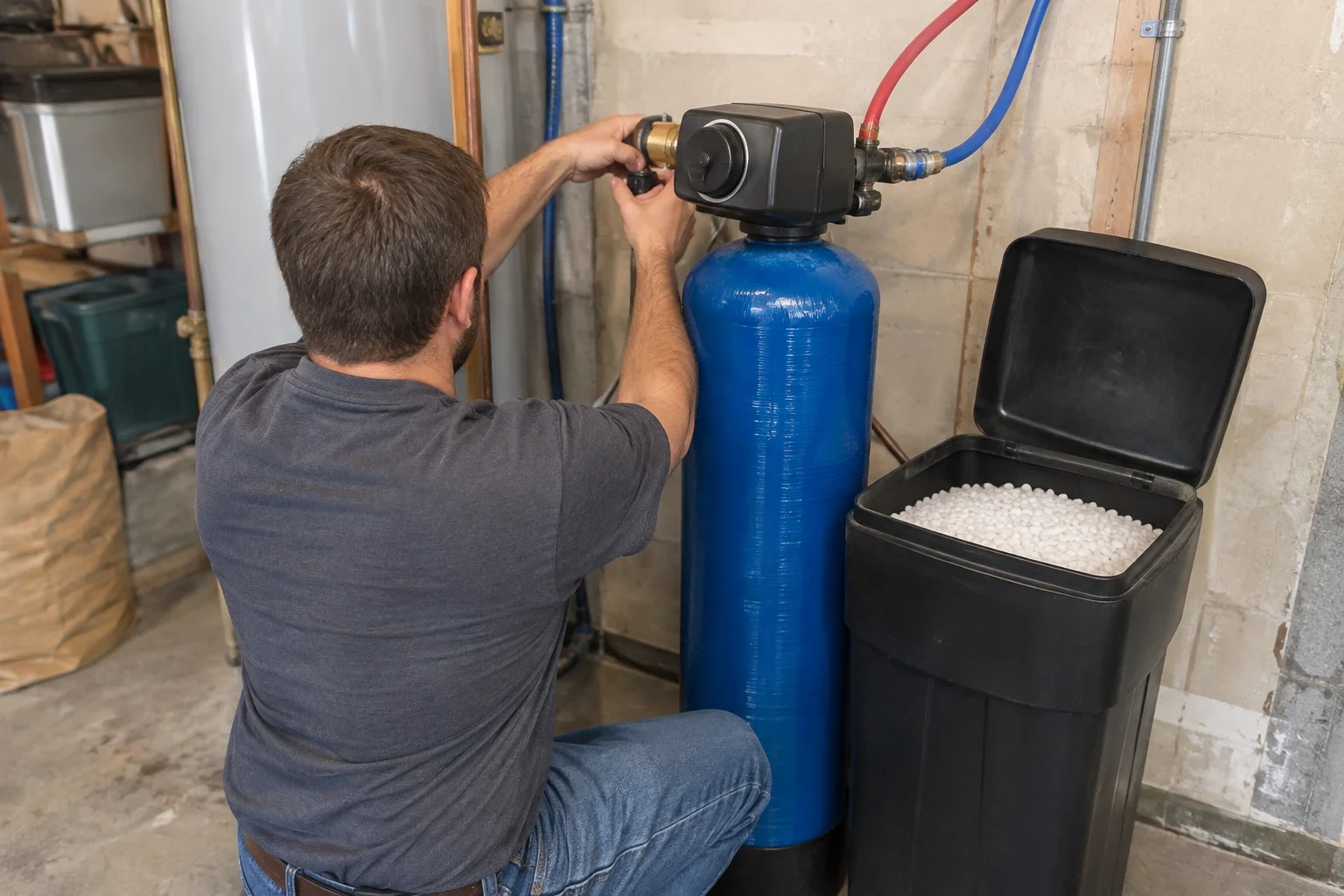
With the bypass, the softener can be isolated for service while water keeps flowing to every faucet in the house. Lines are run square, supported and labeled so anyone can follow them later.
Brine tank and drain line
The salt tank goes where lifting a bag into it is comfortable. We secure the drain line and finish it with a proper air gap.
Startup and walkthrough
We fill the system, set the valve and let you watch the first cycle. Before we leave you will know what salt to buy, how often to check the tank and how to work the bypass.
Signs your home needs a softener
- White crust on fixtures
- Scale forms on showerheads, faucet aerators and glass shower doors. A wipe clears it for a day before it returns.
- Spotty dishes and stiff laundry
- Hardness minerals tie up soap, so glasses come out cloudy and towels stay scratchy even with more detergent.
- A rumbling water heater
- Popping sounds from the heater often point to mineral sediment collected at the base of the tank. The heater strains harder and its life gets shorter.
- An old softener that isn't keeping up
- Salt that vanishes quickly, or hardly drops at all, can mean a worn valve or tired resin. A repair sometimes makes sense; other times a replacement costs less over the years, and we will lay out which applies.
How a softener install goes
- 1
A phone call first
Tell us about your home, your water source and what you have been seeing. You get a free quote, and we can go over financing on the same call.
- 2
A written quote that holds
The equipment, the plumbing work and the total are written out line by line. The price stays valid for 30 days. After signing, you have three business days to cancel if you change your mind.
- 3
Install day
We protect the floor around your mechanical area, shut the main for a short stretch and make the connections. Water is off for only part of the visit.
- 4
Startup, cleanup and payment
We run the first regeneration, check each joint for leaks and carry out the packaging and any old unit. Full payment is due when the install is complete, not before.
What moves the price
Most of the cost comes down to two things: the size of system your home calls for and the amount of plumbing needed to tie it in. Your quote lists each part on its own line, so you can see where the money goes. We confirm the final figure once we know how your mechanical area is laid out.
- Capacity
- The harder the water and the more people in the house, the more resin the tank has to hold. Capacity moves the price more than anything else.
- Valve type
- A metered valve carries a higher price than a simple timer valve. Over the years it earns part of that difference back through lower salt and water use.
- Plumbing changes
- An existing softener loop keeps the work simple. A new loop, rerouted lines or a fresh drain run add labor and material.
- Iron or other issues
- When the water also brings iron or sediment, a separate filter ahead of the softener may be needed to keep the resin healthy. Private wells often fall into this group.
- Removing an old unit
- Disconnecting and hauling away a worn-out softener adds a small amount to the total.
Water softener questions
- Will softened water feel slippery?
- A little, at first. That smooth feeling is soap rinsing off completely instead of being held on your skin by minerals. Within a week or two most people stop noticing it.
- How much salt will I go through?
- It depends on how hard your water is and how much your household draws each day. A properly sized unit with a metered valve uses much less than an older timer model. At startup we give you a realistic sense of how often you will be adding a bag.
- Can I drink softened water?
- Yes. It does carry a small amount of added sodium. Many homeowners put reverse osmosis at the kitchen sink for the water they drink and cook with, and potassium chloride pellets can stand in for sodium salt in the brine tank if you prefer.
- Does a softener remove chlorine or bad taste?
- No. A softener deals only with the hardness minerals. Chlorine taste and smell are handled by whole-home filtration, and we can put both on the same quote.
- Is financing available?
- Yes, through U.S. Bank Avvance, on approved credit. Bring it up on the call and we will walk you through how applying works.
Find out what size softener your home needs
One short call covers your water, your setup and a written number. No pressure to decide on the spot.