ServicesReverse Osmosis
Reverse Osmosis in Germantown
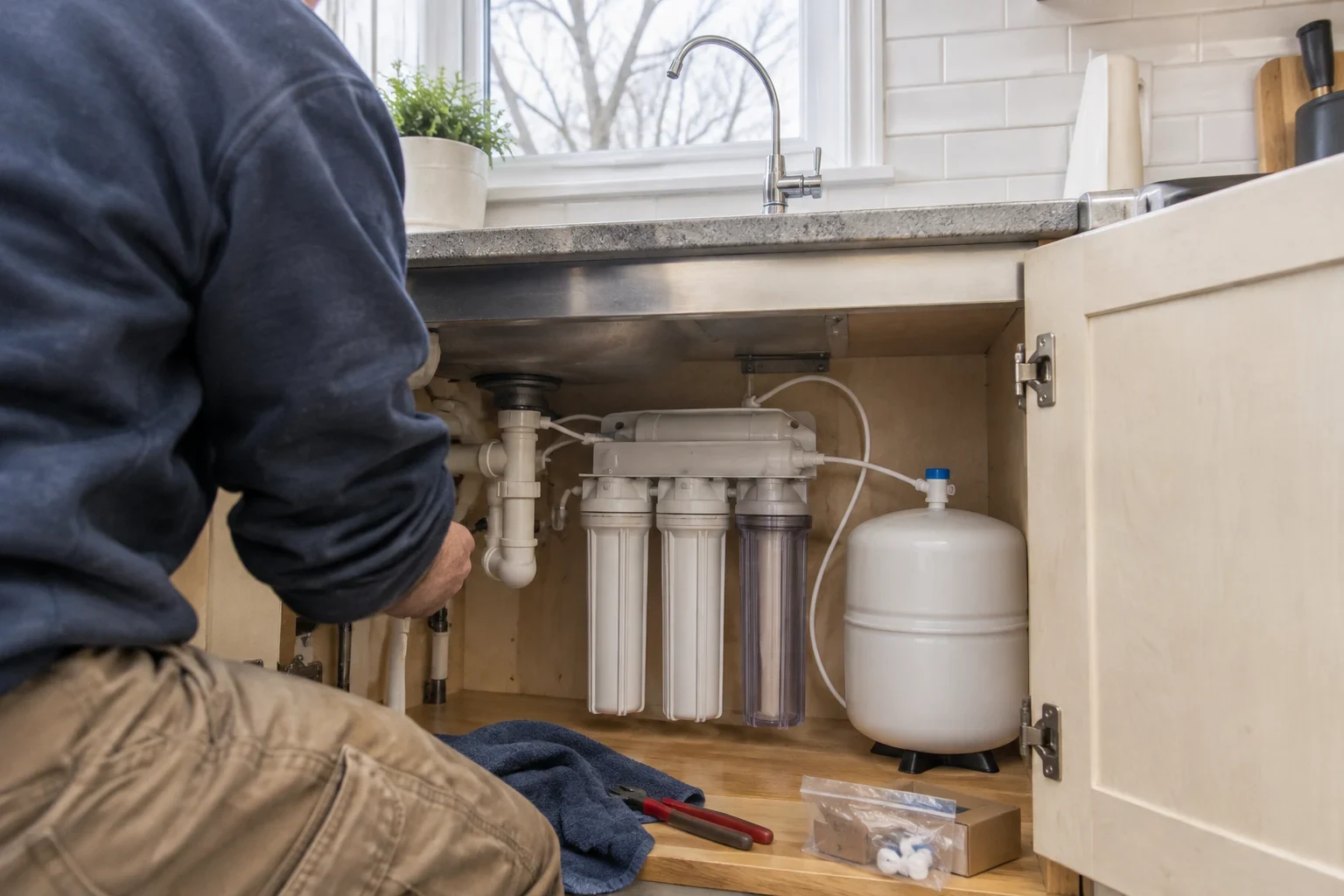
We fit a compact reverse osmosis system beneath your kitchen counter with its own small faucet, so the water you drink and cook with comes from one dedicated tap. You hear up front what it removes, what filter changes cost over time and where each part will sit in your cabinet.
What reverse osmosis does, and when it is the right call
A reverse osmosis system forces water across an extremely tight membrane, and most dissolved material stays behind, including lead, nitrate, sodium and many trace contaminants. Sediment and carbon stages before and after the membrane guard it and clean up the taste. What you get is a modest, steady supply of drinking water at a single tap, not treatment for every faucet in your home.
It makes the most sense when your focus is the water you drink and cook with. For scale on fixtures or a chlorine smell in the shower, a water softener or whole-home filtration does that job better, and we will say so plainly. Plenty of Germantown kitchens pair the two: softened water through the house and reverse osmosis at the sink.
What the installation includes
- A multi-stage system
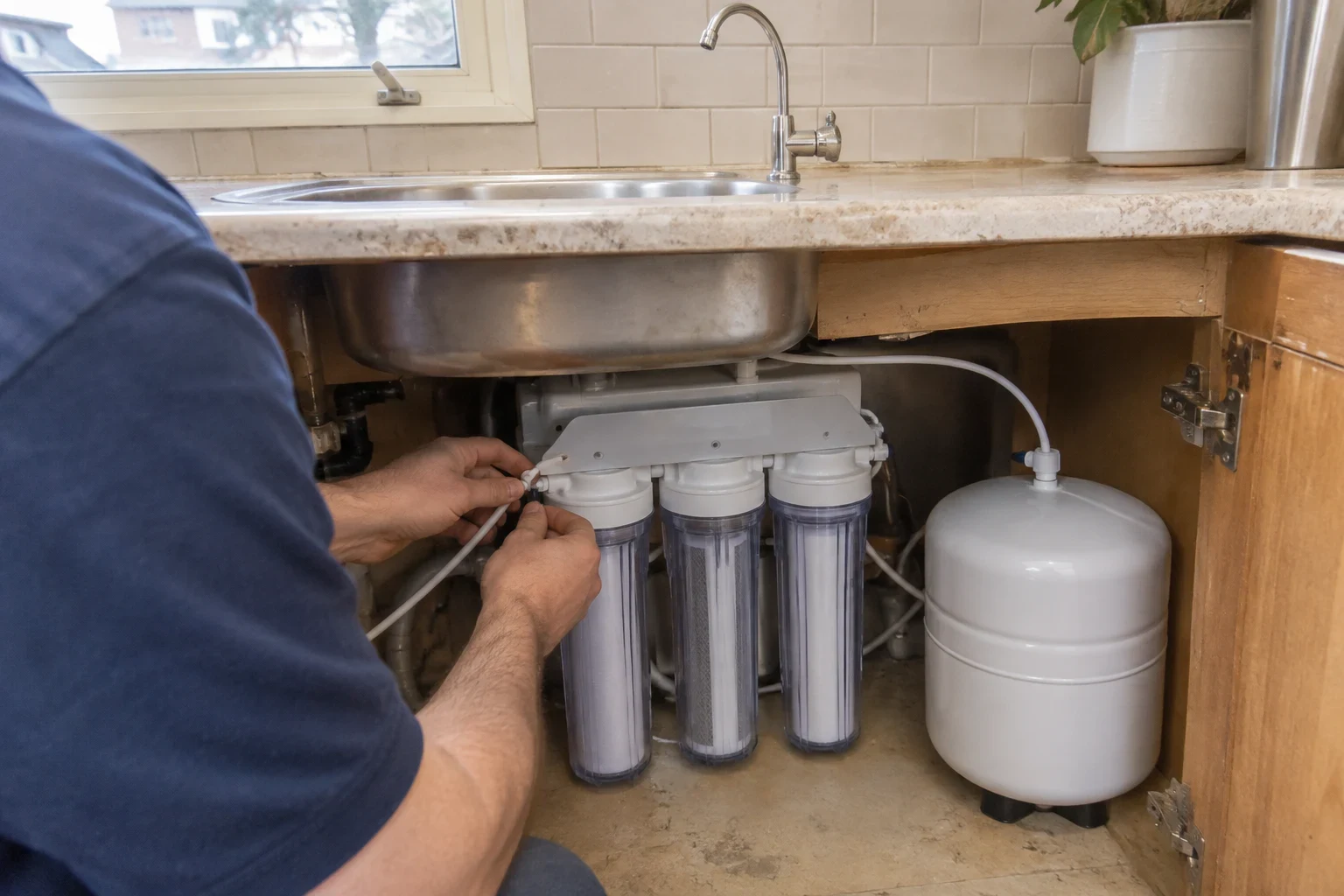
- Sediment and carbon prefilters, the RO membrane itself and a carbon post-filter. The prefilters catch grit and chlorine before they can wear out the membrane.
- A faucet chosen for your kitchen
- Finishes are picked to sit comfortably next to the fixtures you already have. If there is a spare sprayer or soap hole we use it. If not, we cut a clean opening with a bit suited to laminate, granite or quartz.
- Careful supply and drain work
- The cold line gets a tee with its own shutoff, and the sink drain gets a saddle so reject water exits without backflow. Housings are placed where filter changes are easy to reach.
- Storage tank or tankless unit
- A small pressurized tank keeps a few gallons on hand. A tankless unit takes less room and makes water as you use it; we lay out the pros and cons for your cabinet.
- Optional refrigerator line
- Want the same water in your ice and from the fridge door? We can extend tubing over to the refrigerator.
- Startup and flush
- Before we go, the system is sanitized, filled and flushed. We look over each fitting for drips and leave the cabinet wiped clean.
Signs a reverse osmosis system makes sense
You buy bottled water
If cases of water come home every week, an RO tap usually replaces them and frees up pantry space.
Coffee and tea taste off
Minerals and chlorine flatten flavor. RO water gives a cleaner cup and keeps scale out of your kettle.
Older plumbing in your home
Homes with older fixtures or solder can add trace lead at the tap. An RO system is a sensible layer of protection for the water you drink.
A past well report flagged nitrate
Nitrate is one of the things RO handles well at a single tap. Larger well problems call for well water treatment ahead of it.
Cloudy ice and spotted glassware
Dissolved solids show up as cloudy cubes and film on drinking glasses rinsed at the sink.
What moves the price
There is no one price for reverse osmosis, since kitchens and water supplies vary from house to house. We build your quote from the system you choose and the work your sink needs, and once given, your quote holds for 30 days. Financing is available through U.S. Bank Avvance, on approved credit, and we can go over how it works during the same call.
Tank or tankless
A tankless unit costs more at the start but gives back cabinet room. Adding a remineralization stage, which returns a touch of calcium and magnesium for taste, also raises the total.
Faucet and countertop
The faucet finish you choose plays a part. So does the countertop: reusing an open hole is simpler than cutting through granite or quartz.
Refrigerator connection
Sending water to the ice maker or fridge door means more tubing, more fittings and more time. A refrigerator on the far side of the kitchen adds to that.
Pressure and hardness
Low household pressure may call for a booster pump. Hard water shortens membrane life, so a softener upstream can bring down what the system costs to run over the years.
How the work goes
- 1
A phone conversation
You describe your water source, what bothers you about it and the layout of your sink and countertop. We give you a free quote and a direct answer on which system suits you.
- 2
Checking the space
When we arrive, we look over the cabinet, the drain, any disposal and your water pressure. If pressure is low, a small booster pump may be needed, and we ask before adding one.
- 3
Installation
We close the cold supply, fit the tee and drain saddle, mount the faucet and place the tank or tankless unit. Floor and cabinet base are covered throughout. A typical kitchen takes a few hours.
- 4
Walkthrough and payment
You see where the shutoff is, how the filter housings open and when each one is due. Full payment at the completion of the install, after you have watched the new tap run.
Reverse osmosis questions
Does an RO system waste water?
Yes, a portion goes down the drain to flush away what the membrane holds back. Current designs send much less to the drain than older ones did, and softened water feeding the system helps more. We tell you the drain ratio of the exact unit on your quote.
Will the water taste flat?
Some people find RO water tastes extremely clean, close to bland. A remineralization stage puts a small amount of minerals back so the water tastes fuller. Let us know and we will add one.
How often do filters need changing?
Plan on replacing the prefilters and post-filter roughly once a year. The membrane typically runs several years, depending on your water and how much you draw. You get the schedule in writing before we leave.
Can it go on well water?
It can, for drinking and cooking water at the kitchen tap. Iron, sulfur or very hard well water should be treated first with well water treatment, so the membrane is not overloaded.
Will it fit with my garbage disposal?
In nearly every kitchen, yes. The tank or unit sits off to one side, and the drain connection is routed to keep the disposal clear. Where space is tight, a tankless unit usually fits more neatly.
What if I change my mind after signing?
Once you sign, you still get three business days to cancel. No payment is collected until the installation is done.
A better glass of water, right at the kitchen sink
Give us a quick picture of your cabinet, your countertop and what you notice in your water. We will point you to the system that fits and walk you through the cost of owning it, and we can cover financing information during the same conversation.